
- New hospitality experience
- Exploring
At the heart of innovation in our airports
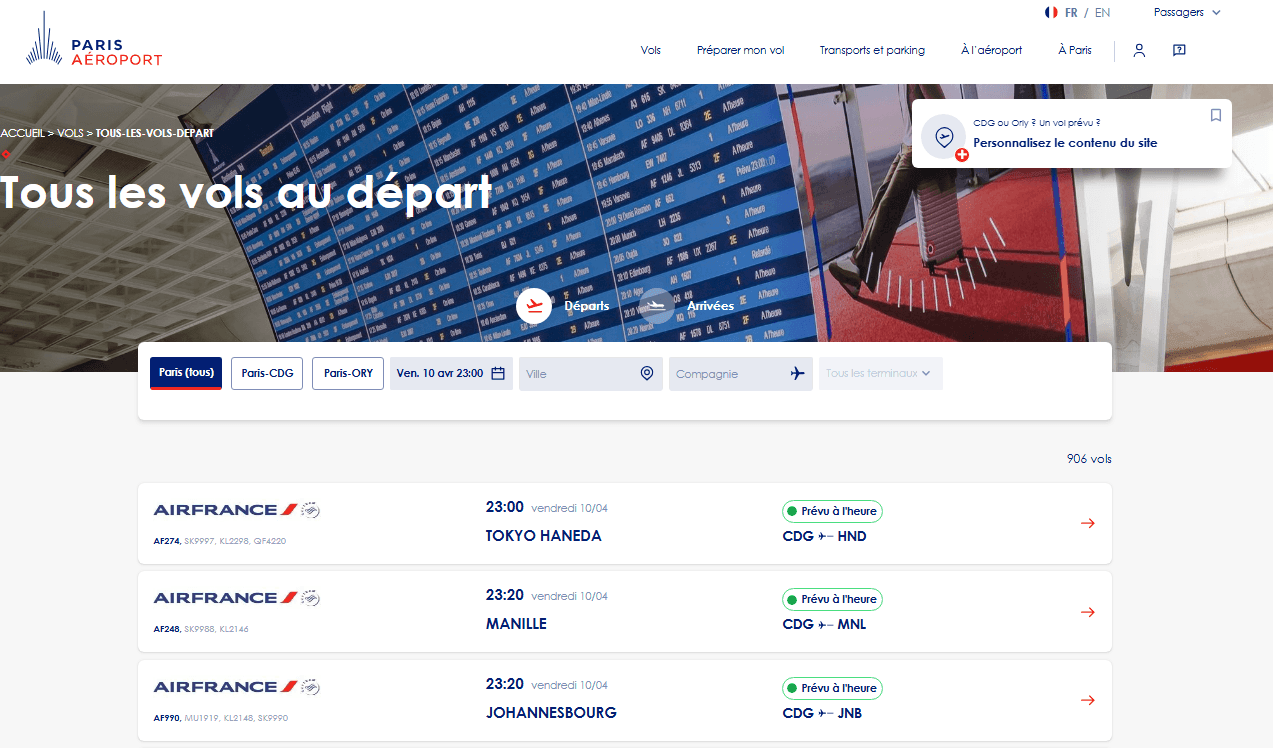

A new travel companion: the new Paris Aéroport website
The guiding principle behind the new Paris Aéroport website, which went live in March 2025, is to be helpful to passengers by addressing their concerns as directly as possible. A fully redesigned, feature-rich website that revolutionizes the user experience by adapting to each passenger’s specific journey.
By simply entering a flight number or destination, the entire website is reorganized around the passenger’s trip. Enhanced personalization, real-time information, and WhatsApp notifications are just some of the new features designed to make the airport experience more stress-free.
Photo: Screenshot of the Paris Aéroport website (©Groupe ADP)
The artificial intelligence revolution is under way at airports
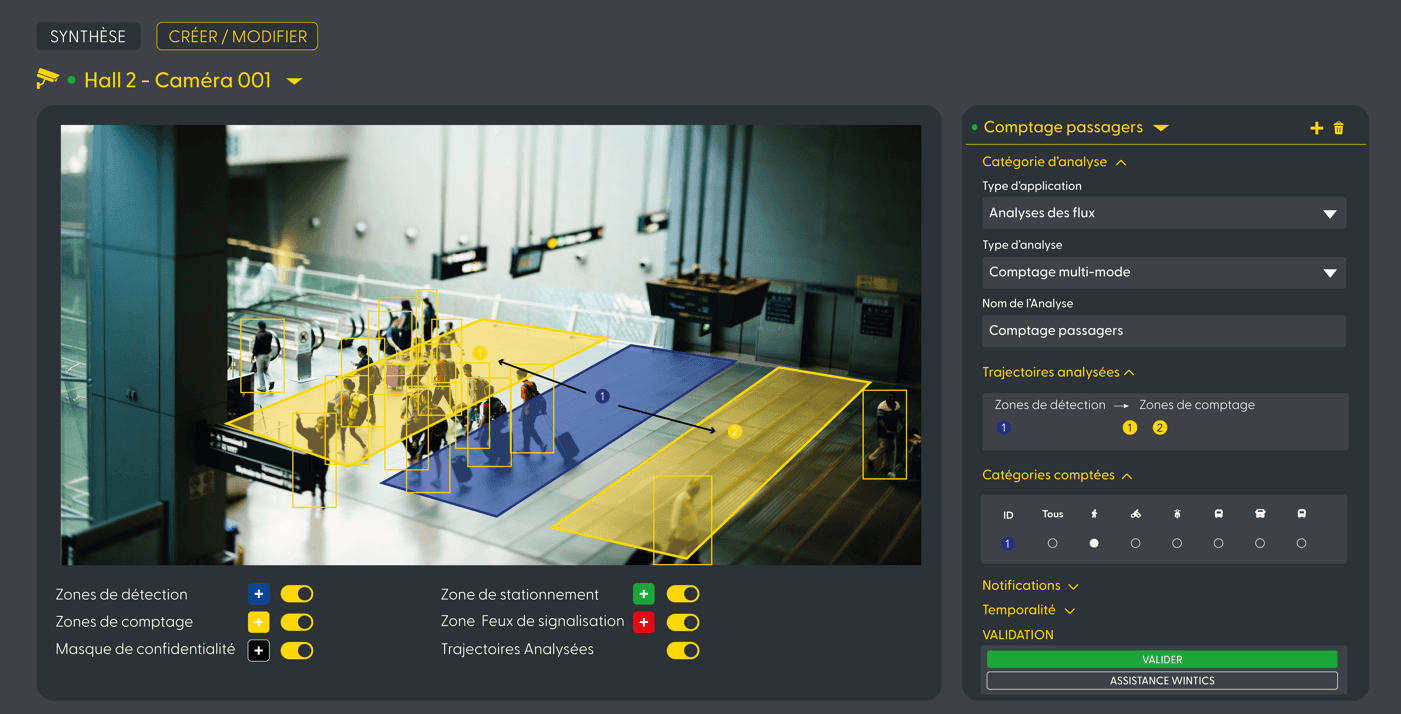
Following the example of the computer vision AI tested on the camera network (see photo), Groupe ADP has embraced the shift toward artificial intelligence and identified a number of concrete use cases.
Tests are being conducted to communicate with hearing-impaired passengers using sign language via generative AI, while a virtual assistant, ChatADP, is already assisting employees.
Another type of artificial intelligence used at the airport is modeling AI, with algorithms that help manage and predict passenger flows and perform predictive maintenance on sensitive equipment, such as baggage sorting machines.
Photo: Screenshot of an AI visualization solution for smart cameras (©Wintics)
A TaxiBot to tow aircraft during ground operations
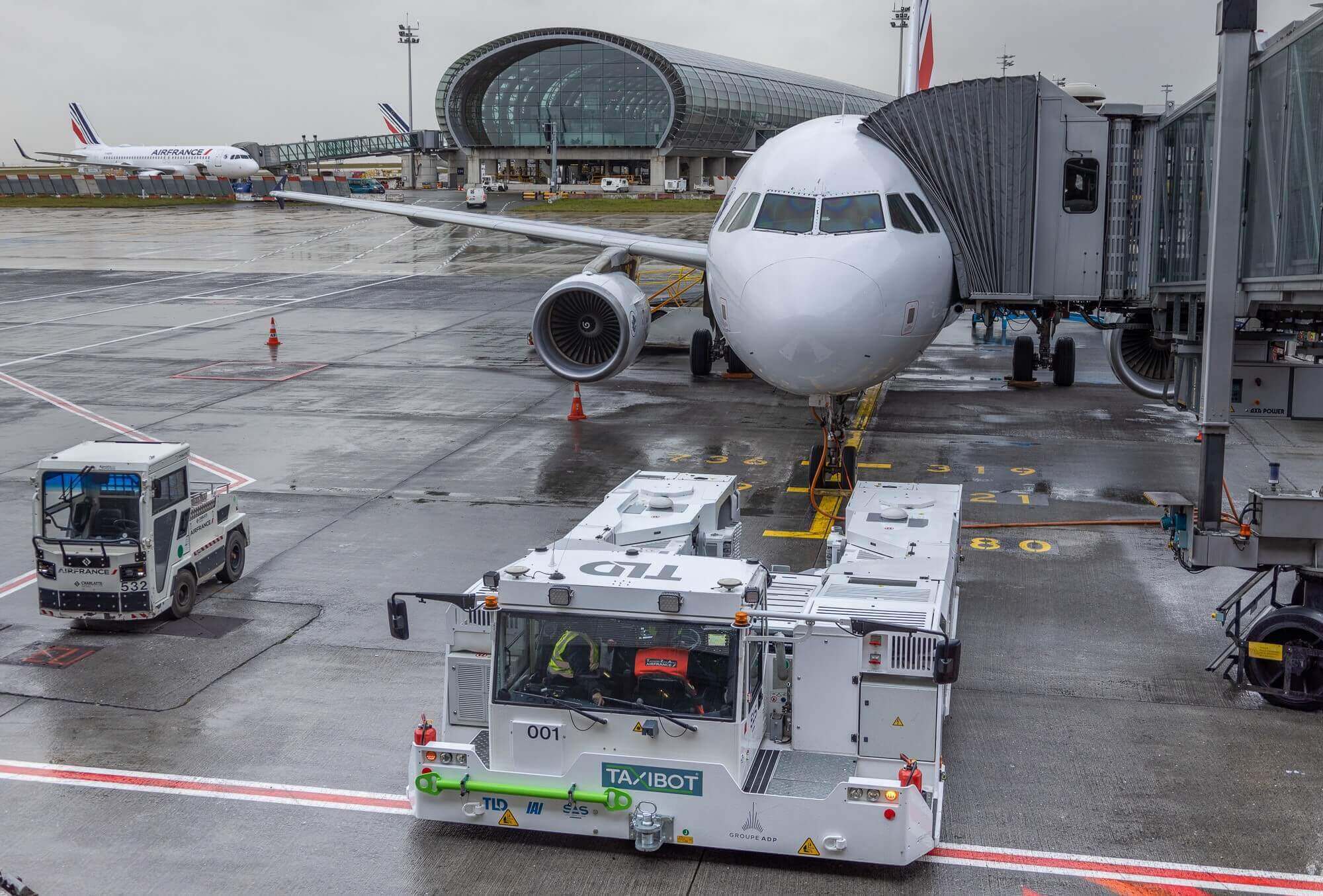
A TaxiBot has been trialed airside at Paris-Charles de Gaulle Airport. This vehicle is used to tow aircraft along the taxiways, i.e. from the stand to the runway threshold for takeoff. As a result, aircraft no longer need to start their engines while taxiing, which reduces noise and jet fuel consumption – and therefore CO2 emissions.
Developed by the French group TLD in collaboration with Israel Aerospace Industries, this TaxiBot, which is made in France, is marketed by Smart Airport Systems.
Photo: TaxiBot solution from Smart Airport Systems at Paris-Charles de Gaulle (©Arnaud Gaulupeau, Groupe ADP)
LiDAR deployed at Paris airports named an example of AI for Efficiency
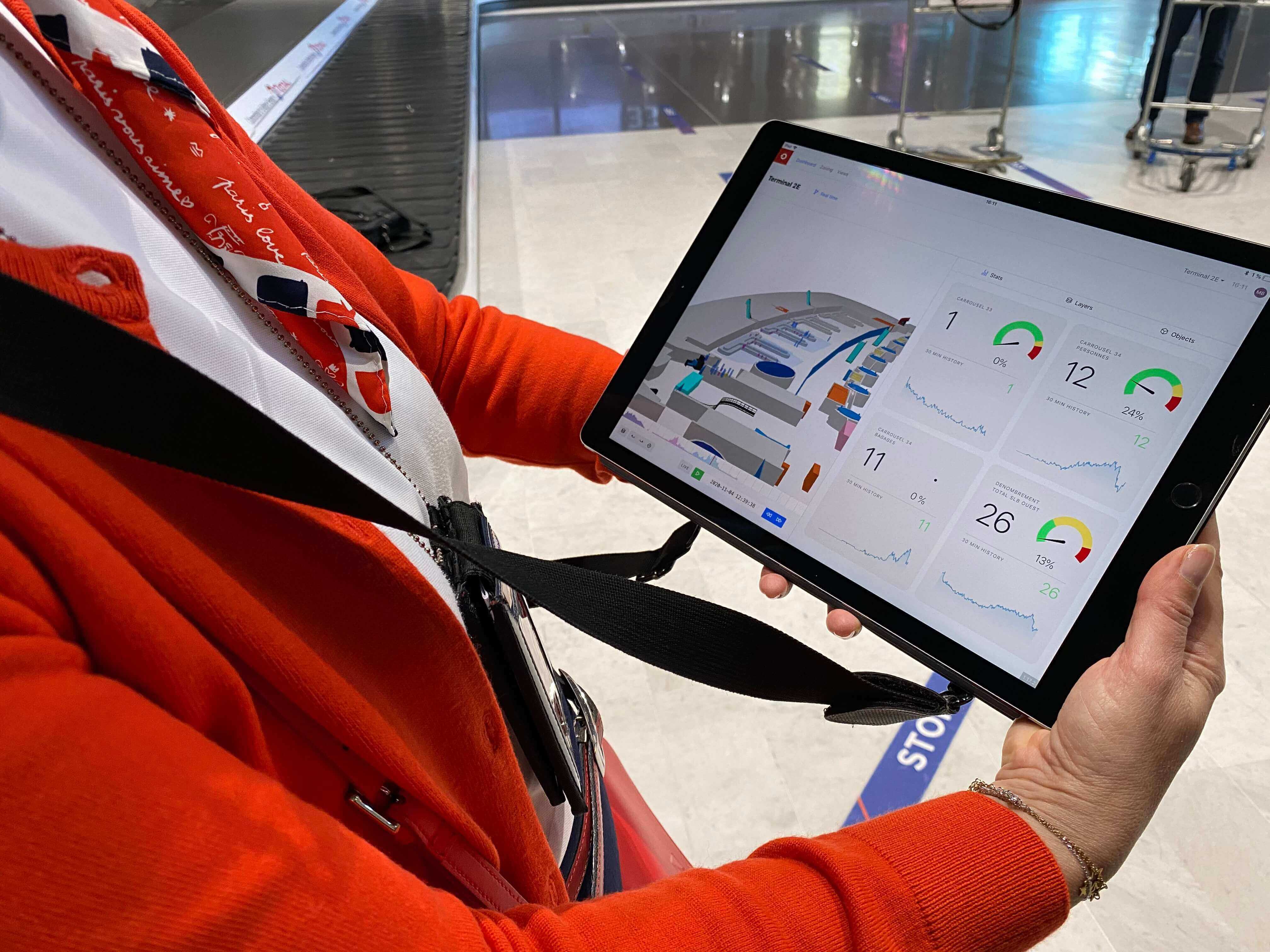
Laser remote sensing, or LiDAR (Light Detection and Ranging), is being deployed at Paris airports in partnership with the start-up Outsight, whose software solution creates a 3D model of the environment (see photo above). Using a simple and intuitive interface, mobile ground staff can monitor and analyze passenger and baggage flows in the terminal in real time, helping to deliver on the commitment to manage waiting times for passengers.
In February 2025, this software application was selected as one of the 1,000 winners of the call for proposals on AI for Efficiency, launched as part of the AI Action Summit in Paris.
Photo: Mobile ground agent equipped with a tablet running the Outsight software solution (©Outsight, Groupe ADP)
A robot to survey biodiversity on airport grasslands
Biodiversity at airports can be monitored and tracked using the Biodivers’IT rover and a suite of associated software features. Developed in partnership with the University of Paris-Est Créteil as part of the European OLGA program, this robot is used to conduct flora surveys of the grasslands bordering the runways and taxiways, in order to detect species worth protecting or undesirable ones. It stops at regular intervals to take photographs which are then analyzed by software supported by artificial intelligence algorithms.
At Paris-Charles de Gaulle, 249 plant species have been recorded across the 1,144 hectares of airport grasslands.
Photo: Airport grasslands at Paris-Orly (©Gwen Le Bras, Groupe ADP)
3D scanners for safer and faster screening of carry-on luggage
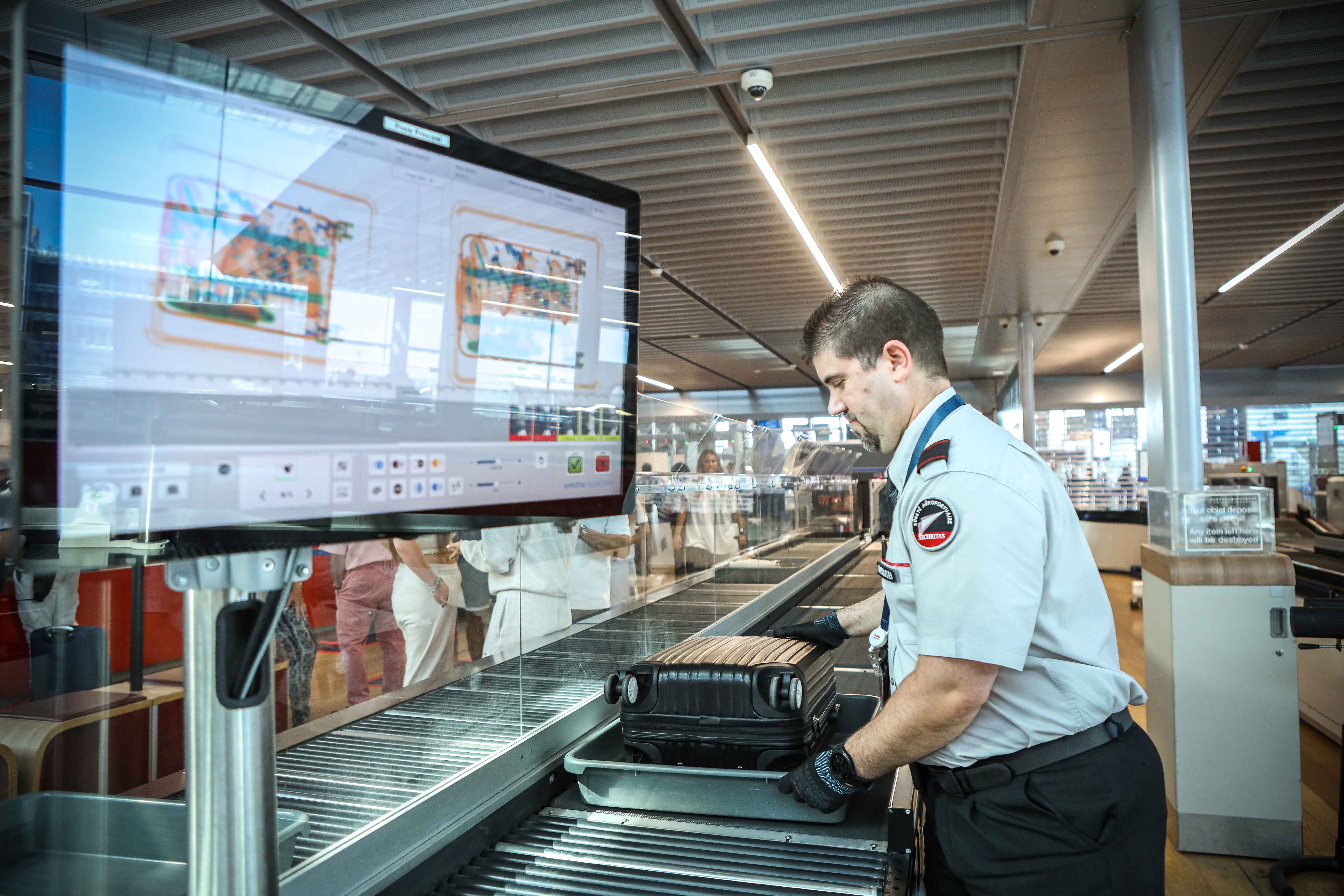
At airport security checkpoints, passenger and carry-on baggage screening has become simpler and faster since the introduction of state-of-the-art 3D scanners. By rotating around the luggage, these scanners are able to detect all objects inside and identify the nature of any liquids.
These scanners, certified by the European Commission in the summer of 2025, are currently being rolled out in Paris airport terminals, with a dozen security checkpoints already equipped. The goal is for all checkpoints to have them by 2030. Passengers will no longer need to take their electronic devices out of their bags. However, for liquids over 100 mL, current French regulations still require them to be removed.
Photo: Smiths Detection 3D scanner at Paris-Orly Airport (©Maxime Letertre, Groupe ADP)
Les Flâneuses, mobile chairs for more comfort and independence
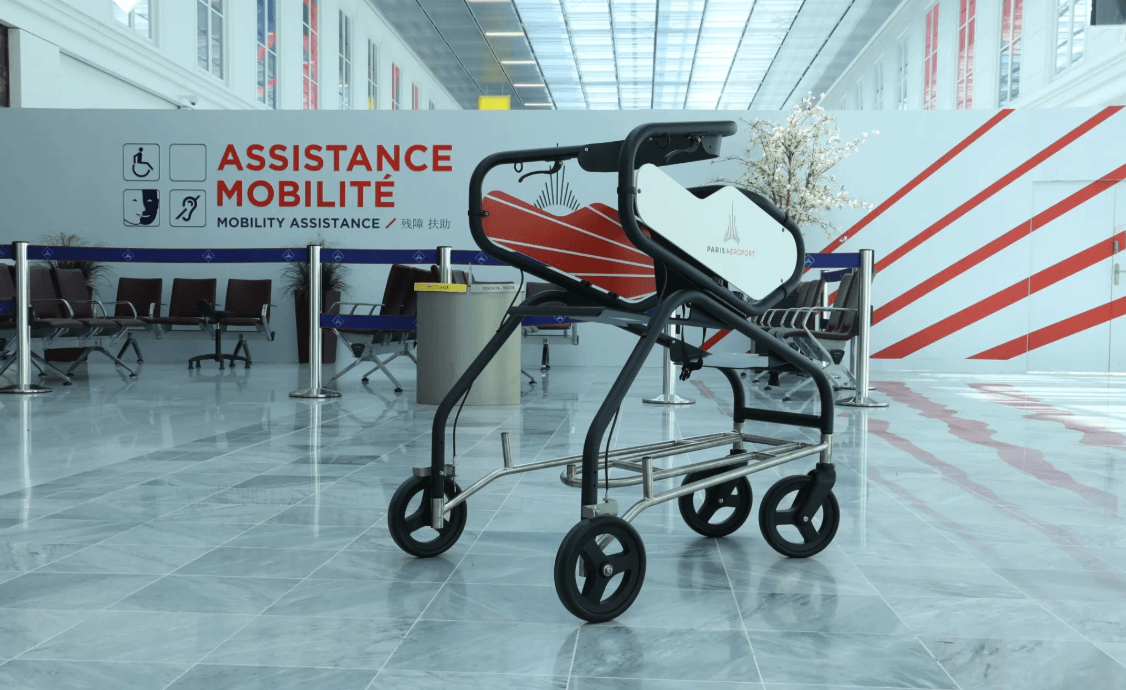
Designed by a start-up in Toulouse, “Les Flâneuses” are versatile, anti-fatigue mobile chairs provided for use throughout the terminals. Following successful trials at Paris-Orly in 2023, Groupe ADP is adopting this solution and has already purchased nearly 300 chairs. They are particularly popular with families with young children and elderly passengers with reduced mobility, as they combine comfort and autonomy.
Photo: Les Flâneuses anti-fatigue mobile chairs (©Les Flâneuses, Groupe ADP)
A robot that patrols and monitors security fences
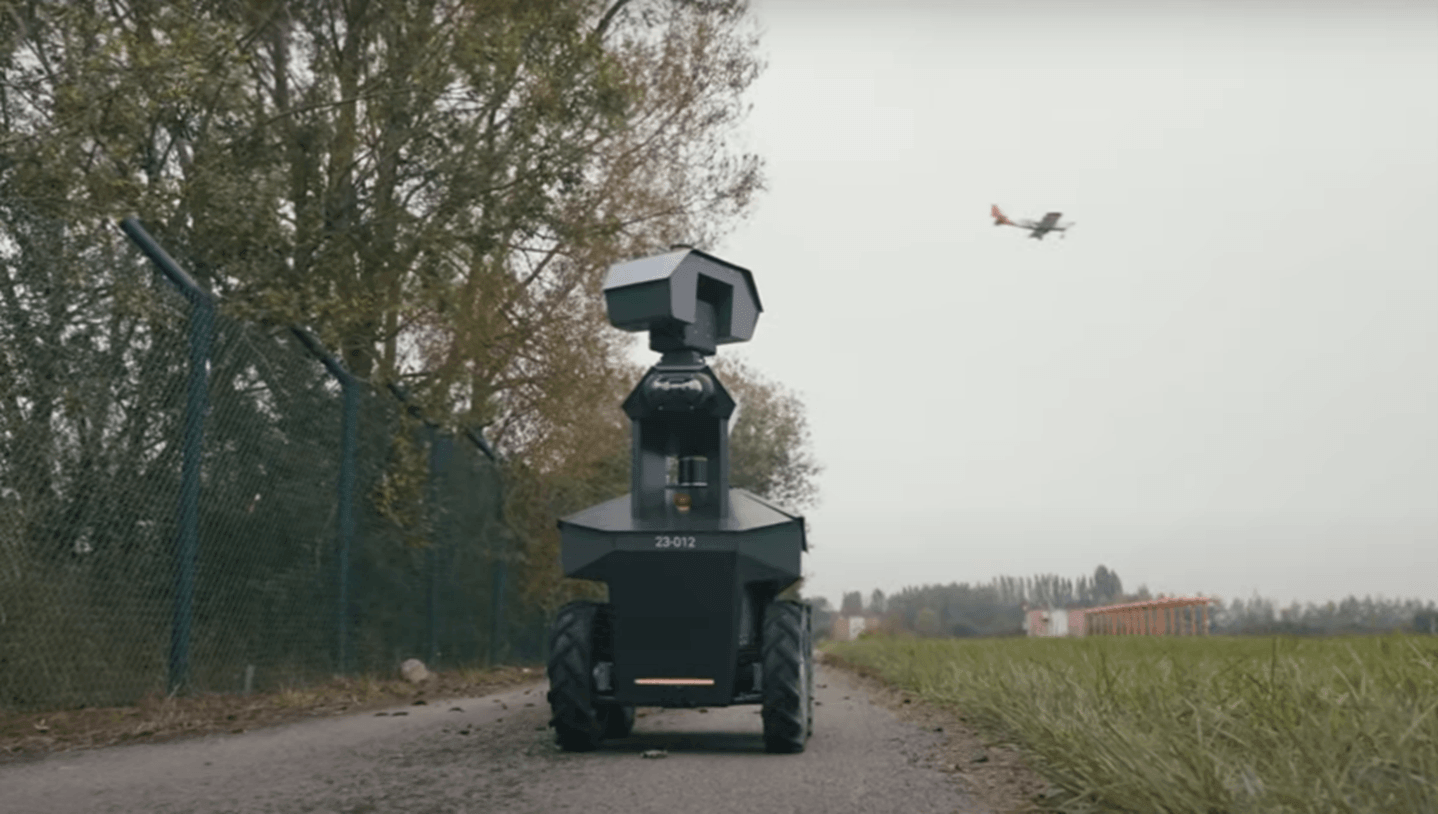
From September 2024 to April 2025, Paris-Saclay-Versailles Aerodrome served as the testing ground for a patrol robot, the GR100, developed by French company Running Brains Robotics.
Equipped with artificial intelligence, this robot patrols the perimeter completely autonomously, 24 hours a day, regardless of weather conditions, to conduct surveillance rounds and inspect all security fences surrounding the aerodrome.
Photo: GR100 patrol robot (©Running Brains Robotics, Groupe ADP)