
Remaining a strategic hub at the heart of global realignment
Faced with fierce competition among the world’s major aviation hubs to capture a share of international traffic – particularly connecting passengers – Groupe ADP, in partnership with Air France-KLM, is mounting a counteroffensive to stem the decline in their market share, combining immediate action with a long-term vision.
The hub: a model at the heart of global competition
Hubs, the airports selected by airlines to serve as transit points for a significant share of their flights and to provide fast, guaranteed connections, first emerged in the 1980s. American Airlines was one of the first to adopt this model, followed by European airlines in the 1990s and then by Asian and Middle Eastern airlines in the 2000s.
Today, global air traffic is organized around 60 major hubs, which have become strategic assets for their regions. Every airline has its preferred airport: Delta is based in Atlanta, Emirates reigns supreme in Dubai, while in London, British Airways operates half of the flights at Heathrow Airport.
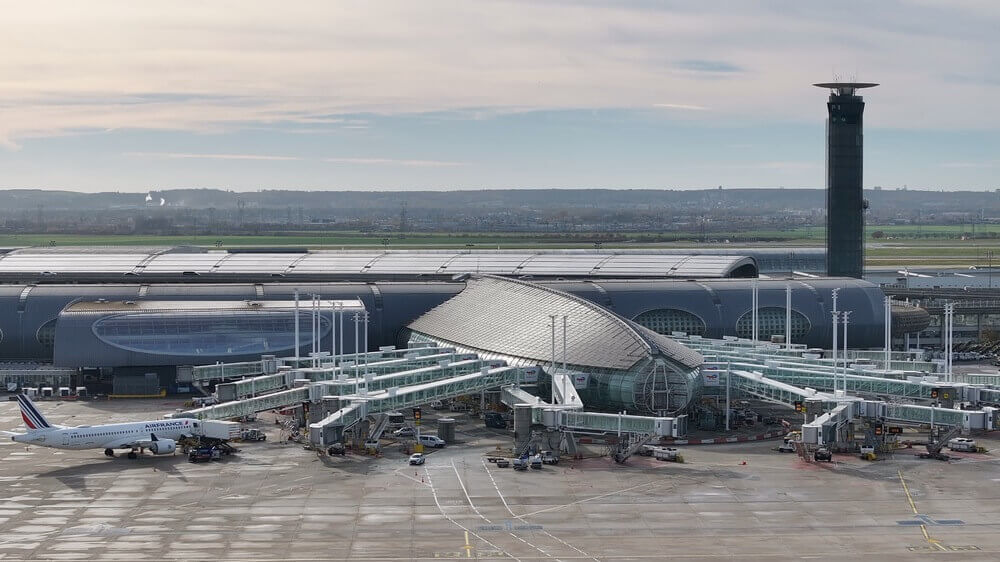
But over the past 20 years, we have seen European hubs and airlines fall behind. Despite their efforts, they lost 11 percentage points of market share, with Air France losing as much as 19 percentage points. This decline has primarily benefited hubs and airlines in the Gulf and the Middle East: over the same period, airlines in the Gulf and the Bosphorus region significantly increased their capacity, by more than 900%. Their aggressive strategy has enabled them to achieve annual passenger traffic growth that is 6 to 10 times faster than in Paris over the past 25 years. It took Istanbul just six years to find a place among the top three airports on the European continent in 2024, with 84 million passengers in 2025. With 95.2 million passengers, Dubai – which serves 291 destinations – has become the world’s second-largest hub, while Doha Hamad has posted a spectacular average annual growth rate of 12.2% over the past 25 years.
A sovereignty issue for France
At the same time, the Paris hub has slipped in the global rankings. In 2019, Paris-Charles de Gaulle, the European Union’s busiest airport, was ranked ninth in the world and has since dropped four places due to the rapid rise of hubs in Asia, the Bosphorus region, and the Middle East.
Compared with these hubs, which receive massive government subsidies, the competitiveness of Paris-Charles de Gaulle and Air France-KLM is hampered by several factors: a heavy tax burden, new European requirements, and specific national measures. Yet a country’s aviation sector, by facilitating access to export markets, attracting foreign investment, and boosting tourism, serves as a fundamental driver of a nation’s economic, diplomatic, and industrial sovereignty.
By providing direct connectivity, a major hub generates 1.5 to 3 times more demand than an indirect connection, and helps to bolster national and regional competitiveness through tourism and business travel, investment, exports, and job creation. This decline thus comes at a cost: while more flights than ever are flying over France today, the country is becoming less and less connected.
"In Europe, we are fortunate to have major hubs. With 119 destinations served and 72 million passengers, Paris-Charles de Gaulle is one of them. It is one of the largest airports in the world, and we are fortunate that it is located in France. We need to keep it that way."
A major initiative to boost the competitiveness of the Paris hub
For Groupe ADP and Air France, this decline is not inevitable. On the contrary, it should lead to a joint effort by the national airline, Europe’s leading hub, and the public authorities. This is the focus of the proposed economic regulation agreement (ERA) submitted by Groupe ADP in late 2025, which outlines an ambitious, phased investment plan spanning eight years and aims to make the Paris hub a global benchmark for hospitality and customer experience.
Finally, through the Connect France partnership for action, the Group, alongside Air France-KLM, reaffirms its commitment to making the Air France hub at Paris-Charles de Gaulle a powerful tool for promoting France and the Paris-Île-de-France region. The two partners, who already took concrete steps in 2025, have also proposed 33 legislative and regulatory measures at national and European level that could remove barriers to improving the hub’s competitiveness.
There is a direct link between connectivity and economic vitality. When international air traffic shifts away from France to foreign hubs, the entire local and national economic fabric is affected. Conversely, the growth in tourist arrivals in Qatar, for example – with 5 million foreign visitors in 2024, nearly 10 million overnight stays, and tourism contributing 8% to the national GDP – illustrates the positive impact that a competitive hub like Doha Hamad can have.